Skip to content
Andrew VictorFor President · 2028
Open menu

Policies

The problems, the approach, and the people in the room

These are the longer positions behind the platform. Each one is written so you can finish it. The through-line is the same: integrity first, then competence, then a public way to tell whether the work is real.

01

Economy

An economy that rewards work

Wages, housing, and fair rules for people who build, grow, and serve — not only for people who already have a lobbyist.
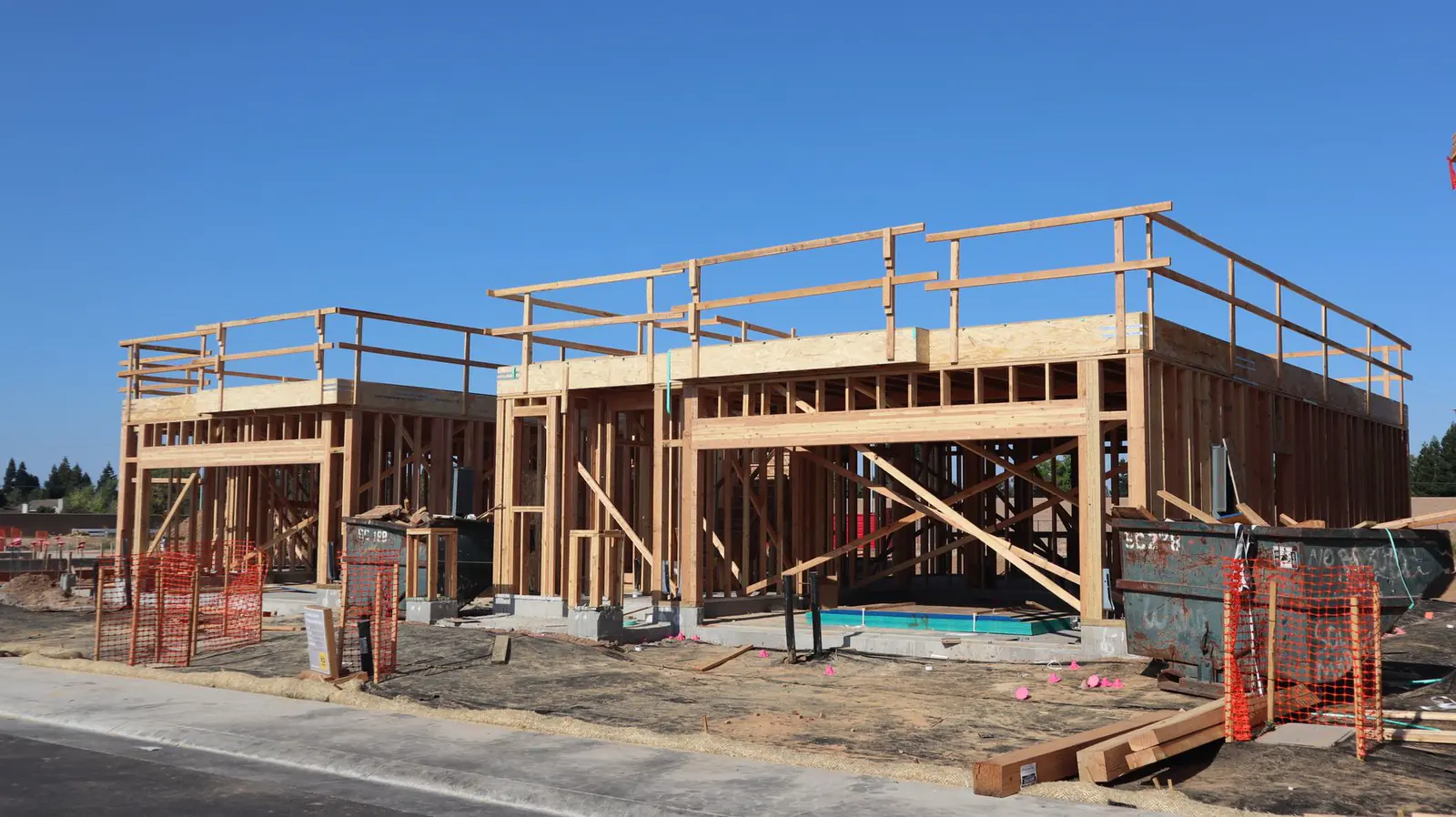
Wooden frames of new houses under construction, with stacks of lumber in the foreground.

The problem

A lot of families are doing the work and still can't get the math to pencil out. Housing takes too long to build. A paycheck doesn't stretch the way it used to. Small employers lose weeks to delay, while large incumbents learn how to work the rules. People don't need another speech about the economy. They need a straight account of why work isn't paying the way it should, and a government willing to change the rules that are actually in the way.

The approach

Judge economic policy by ordinary life: whether wages keep up, whether housing gets built, and whether starting or growing a business is a real path. If a proposal helps a spreadsheet and misses the household, say so.

Speed up permitting for housing, energy, and infrastructure without tossing out safety. A decade of waiting is not protection. Pair that with competition policy that favors builders — the people who make, grow, and serve — over arrangements that exist to protect a position.

Treat skilled trades, community colleges, and apprenticeships as seriously as four-year degrees. Publish the tradeoffs of tax and spending choices in plain English, including who pays and who benefits.

Who he’d bring to the table

Small employers and labor leaders at the same table, housing builders and city planners, economists who disagree with each other, and workers who have changed careers midlife. The test is whether they have delivered something people can use — not whether they pass a loyalty check.


02

Healthcare

Healthcare people can actually use

Clearer prices, stronger primary and mental health care, and coverage rules written so a family can follow them.

A clinician in a white coat speaking with a patient in a bright exam room.

The problem

People meet the health system at the worst moment and find a maze: a bill they couldn't have predicted, a network they can't decode, a primary-care appointment months out, mental health treated as an extra. Getting sick is hard enough. The system should not be designed to wear a family down. Dignity is not a soft word here. It means a person can get care without a second job as their own case manager.

The approach

Push for prices a person can see before the visit, not only after the bill arrives. Coverage rules should be readable, and a denial should come with a real path to appeal when it is wrong.

Put more weight on primary care, rural care, and mental health — the work that keeps people out of crisis. Pay for that capacity instead of assuming the emergency room will catch whatever we neglect.

No single slogan fixes a system this large. Set public goals — time to an appointment, surprise-bill rates, mental-health access — and report progress. Copy what already works in states and health systems when the evidence holds up, and drop what doesn't.

Who he’d bring to the table

Nurses, primary-care clinicians, hospital operators, patient advocates, insurers willing to open their rules, and people who have been buried in denials or debt. Kindness without competence is a press release. Competence without kindness is how the maze got built.

03

Education

A real path after the schoolhouse door

Excellent teachers, safe schools, and more than one good way forward: college, trades, service, or starting something.

A teacher and adult students gathered around a table in a classroom.

The problem

Too many children still get a different education depending on their ZIP code. Teachers are asked to do everything except the thing they trained to do. Parents are handed slogans instead of a clear picture of whether their child can read and do math. After graduation, the path into a good job is muddy — debt for some, a closed door to an apprenticeship for others.

The approach

Start with excellent teaching and safe schools. Fund what happens in the classroom and be honest about what isn't working. Parents and teachers are partners, and both deserve information that isn't spin.

Keep more than one good exit in good repair: college, skilled trades, service, and entrepreneurship. Expand apprenticeships with employers who will actually hire. Career and technical education is a first choice, not a consolation prize.

Opportunity is a ladder we maintain. That means early literacy, counselors who know the local job market, and community colleges treated as essential infrastructure. The culture-war megaphone does not teach a child to read.

Who he’d bring to the table

Teachers and principals, parents, educators from every kind of school, employers who train apprentices, community college leaders, and students. If a reform can't be explained to a teacher on a Thursday night, it isn't ready.

04

Climate and energy

Stewardship that still keeps the lights on

Clean, reliable energy, faster and smarter permitting, and a transition that doesn't punish people who build and farm.

A row of wind turbines in a sandy desert under a clear sky.

The problem

We owe the next generation a livable country and an economy that still works on a Tuesday in January. Projects that would cut pollution sit in line for years. Households watch the bill. Communities that powered the last economy are told, in so many words, that the next one has no place for them. Stewardship that ignores reliability, cost, or work is not moral. It is incomplete.

The approach

Build clean, reliable energy, including power that can run when the weather doesn't cooperate. Reliability and pollution have to be tracked together with what families pay. One number without the others is a way of lying to ourselves.

Make permitting faster and still serious about safety and local impact. Innovation should cut pollution without treating builders, tradespeople, and farmers as the obstacle.

Communities tied to existing energy work deserve timelines and real pathways into building what comes next — not a speech and a closed plant. Publish the goals, and revise them in public when the engineering says we were wrong.

Who he’d bring to the table

Grid engineers, utility operators, climate scientists, farmers, the trades that build projects, mayors from energy communities, and environmental advocates willing to argue about timelines in the open. Competence is part of the ethic.

05

Immigration

Laws enforced, people treated as people

Secure borders, orderly asylum and legal immigration, and enforcement that doesn't traffic in fear.

An empty two-lane highway running through red desert rock under a blue sky in Monument Valley, Arizona.

The problem

The system is chaotic and slow at the same time. Borders are not enforced with consistency. People who follow the legal process wait for years. Asylum is asked to carry a job it was not built to do alone. Cities feel the strain. Human beings get used as props in someone else's argument. Chaos helps no one. Cruelty isn't a strategy, and neither is pretending the law is optional.

The approach

Support secure borders and enough capacity to know who is arriving and to apply the law evenly. Orderly asylum means faster, fair decisions: real protection when someone qualifies, and a final answer when they don't.

Legal pathways should match family commitments and the work the country actually needs, sized honestly and decided in public — not by wink and backlog. Enforcement should be lawful and even. Fear is not a policy instrument.

States, cities, schools, courts, and workplaces are carrying the practical load. They belong in the design of the policy, not only in the press conference after the fact.

Who he’d bring to the table

Border-community leaders, immigration judges and attorneys, employers, labor groups, faith communities, refugee resettlement organizations, and local officials dealing with arrivals now. Decency and order are not opposites.

06

National security

A serious defense of a serious country

A clear strategy, care for the people who serve, and protection for the civilian systems daily life depends on.

The steel underside of a bridge in Louisville, Kentucky, against a blue sky.

The problem

The country faces real threats from rival states, terrorism, and attacks on the systems civilians live inside — hospitals, power, water, and the machinery of elections. The people in uniform, and the alliances that multiply American strength, deserve competence and a straight story about tradeoffs. Open-ended missions and slogan strategy exhaust the force and confuse the public.

The approach

Tie defense spending to a strategy someone can explain: what we will protect, with whom, and what we will stop promising. Diplomacy and alliances are tools of security, used with a clear view of American interests — not as theater and not as an afterthought.

Take care of the force. Recruiting, housing, health care for veterans, and the families who carry deployments are part of readiness. A country that thanks troops and then loses them in a backlog has not kept faith.

Treat the defense of civilian infrastructure as a governing priority, coordinated with the people who actually run those systems. Oversight should be public wherever classification allows. Some things stay secret for a reason. Embarrassment is not a reason.

Who he’d bring to the table

Retired commanders and enlisted leaders, diplomats, intelligence professionals who will brief the public at an unclassified level, engineers who defend hospitals and grids, and veterans' groups. Hire for judgment. A television performance is not a qualification.

07

Democracy and reform

A government you can check

Secure, accessible elections, ethics you can see in hiring and spending, and decisions with a public trail.

A row of empty voting booths in a room, with an American flag standing beside them.

The problem

People are asked to trust a count they can't follow, a process that disappears into an agency, and ethics rules that get announced and then bent. Voting in most of the country is more secure than the shouting suggests, and still easy to undermine with intimidation and lies. Governing has become a performance of winning the day. A republic can survive argument. It cannot survive a habit of hiding the homework.

The approach

Elections should be secure, accessible, and explained: rules set before the vote, records a citizen can understand, results reported in plain language. Defend the right to vote. Reject intimidation and disinformation. Encourage every eligible citizen to cast a legal ballot.

Major actions should leave a decision trail: what was decided, by whom, on what evidence, and how we'll know if it worked. Ethics is not a press release. It is how we hire, how we spend, who recuses, and how we correct a mistake in public.

Measure government by service — time to a permit, time to a benefit decision, time to a straight answer — and publish the scoreboard. Shaking up politics means raising the standard, not lowering it.

Who he’d bring to the table

Election administrators from every party, county clerks, inspectors general, civil servants, and citizens who have tried to get a straight answer from a public office. The standard is simple: if we ask for trust, you should be able to check the work.